
Engagement data readiness: The signals you need and the ones to avoid
Apr. 13, 2026 · Authored by Cicrim Editorial Team
Banks do not have an engagement problem nearly as often as they have a signal problem. Too many institutions are collecting clicks, opens, page views, campaign responses and CRM notes without a clear framework for deciding which signals actually matter. The result is familiar: Fragmented outreach, channel fatigue, weak attribution, inconsistent next-best actions and governance concerns about how data is being used. Engagement data readiness is the discipline of separating useful behavioral evidence from background noise so banks can activate customer intelligence with confidence.
At Cicrim, we see the strongest engagement programs begin with a practical question: What signals can be trusted enough to influence a decision, a workflow or a customer interaction? That question matters across onboarding, deposit growth, cross-sell, retention, small business outreach and servicing journeys. It also matters for compliance, because poorly defined engagement signals can drive the wrong message to the wrong customer at the wrong time. Data readiness is not just a technical exercise. It is an operating model for activation, prioritization and control.
The five pillars of engagement data readiness
- Signal relevance and prioritization: Not every event deserves equal weight. A product page visit is not the same as a completed application start. A branch appointment request is not the same as a generic email open. Banks need a clear signal hierarchy that distinguishes curiosity from intent, intent from action and action from confirmed conversion. The most effective programs define which events can trigger campaigns, which should inform scoring only and which should be ignored entirely.
- Data quality and event consistency: Engagement analytics break down when events are captured differently across channels, product lines and vendors. Naming conventions, timestamp quality, customer identity resolution, duplicate events and channel attribution all need to be standardized. Without consistency, dashboards may look active while underlying decisions remain unreliable.
- Customer identity and context enrichment: Signals become more valuable when they are tied to the right household, business, product relationship and lifecycle stage. A digital interaction from a long-tenured treasury management client should not be interpreted the same way as similar behavior from a new retail prospect. Readiness requires linking interaction data with customer, product, servicing and channel context.
- Governance, privacy and permissible use: Banks need explicit rules around which signals can be used for marketing, servicing, decision support and model inputs. Consent status, communication preferences, fair lending considerations, UDAAP risk, explainability expectations and auditability all need to be embedded into the signal framework. The goal is to create an activation layer that is useful, reviewable and safe.
- Operational activation and feedback loops: Data readiness is incomplete unless the signals improve real work. That means aligning engagement signals to specific actions such as contact-center prompts, banker outreach, onboarding nudges, campaign suppression rules or branch follow-up tasks. It also means measuring whether the signal produced a better outcome, so the bank learns which indicators deserve ongoing trust.
The signals you need
- High-intent behavioral events: Application starts, pricing inquiries, document uploads, appointment bookings, secure message initiation, product comparison activity and repeat visits to conversion-oriented pages often carry far more value than broad awareness metrics.
- Lifecycle transition indicators: First payroll deposit, debit card activation, first ACH setup, direct deposit changes, new merchant categories, usage decline and dormant-to-active behavior can reveal meaningful movement in relationship depth and customer needs.
- Channel friction signals: Repeated login failures, abandoned forms, contact-center escalation after digital activity, repeated branch lookups and document resubmissions often indicate a need for intervention, not another marketing message.
- Preference and consent markers: Opt-ins, opt-outs, contact frequency preferences, preferred channels and communication restrictions should always travel with the engagement signal. They are not secondary metadata. They are foundational controls.
The signals you do not need
- Vanity activity with no decision value: Isolated page views, generic email opens, low-quality ad clicks and passive impressions often create dashboard volume without creating actionable intelligence.
- Unverified third-party events: If the source cannot be reconciled to a customer, a household, a business or a permitted use case, it should not drive outreach or prioritization logic.
- Events that cannot be explained operationally: If relationship managers, marketers, compliance teams and model owners cannot interpret why a signal matters, it should not influence high-impact workflows.
- Redundant data collected only because it is available: More fields do not create more insight. Over-collection increases storage, mapping, governance and review costs while often reducing clarity for frontline teams.
What readiness creates for the business
- Cleaner prioritization: Teams stop reacting to every event and start focusing on the interactions that correlate to product need, service risk or relationship expansion.
- Better customer experiences: Customers receive fewer irrelevant touches and more timely, context-aware outreach aligned to their actual behavior and channel preferences.
- More defensible analytics: Marketing, digital, servicing and compliance teams can review the same signal definitions and understand how those definitions are used in segmentation, outreach and measurement.
A Cicrim view of engagement data readiness
Cicrim approaches engagement readiness as a controlled intelligence layer for community and regional banks. That means combining event design, identity resolution, preference governance, policy controls and activation workflows into a single framework that can support both growth and oversight. Rather than beginning with every possible data source, we recommend starting with a small, defensible signal set tied to real operating decisions. Once those signals are producing measurable value, the bank can expand with more confidence.
In practice, that often means defining a bank-specific engagement signal taxonomy, mapping those signals to lifecycle use cases, validating whether each signal is suitable for decisioning or outreach and then instrumenting feedback loops so teams can learn what is producing real conversion, retention or service outcomes. This is where data readiness moves from abstract architecture to business discipline.
What a bank-ready signal framework should include
Banks need a practical operating structure for capturing, scoring and governing engagement signals across digital, branch, lending and service channels. The framework should be clear enough for business users and rigorous enough for risk, compliance and audit stakeholders.
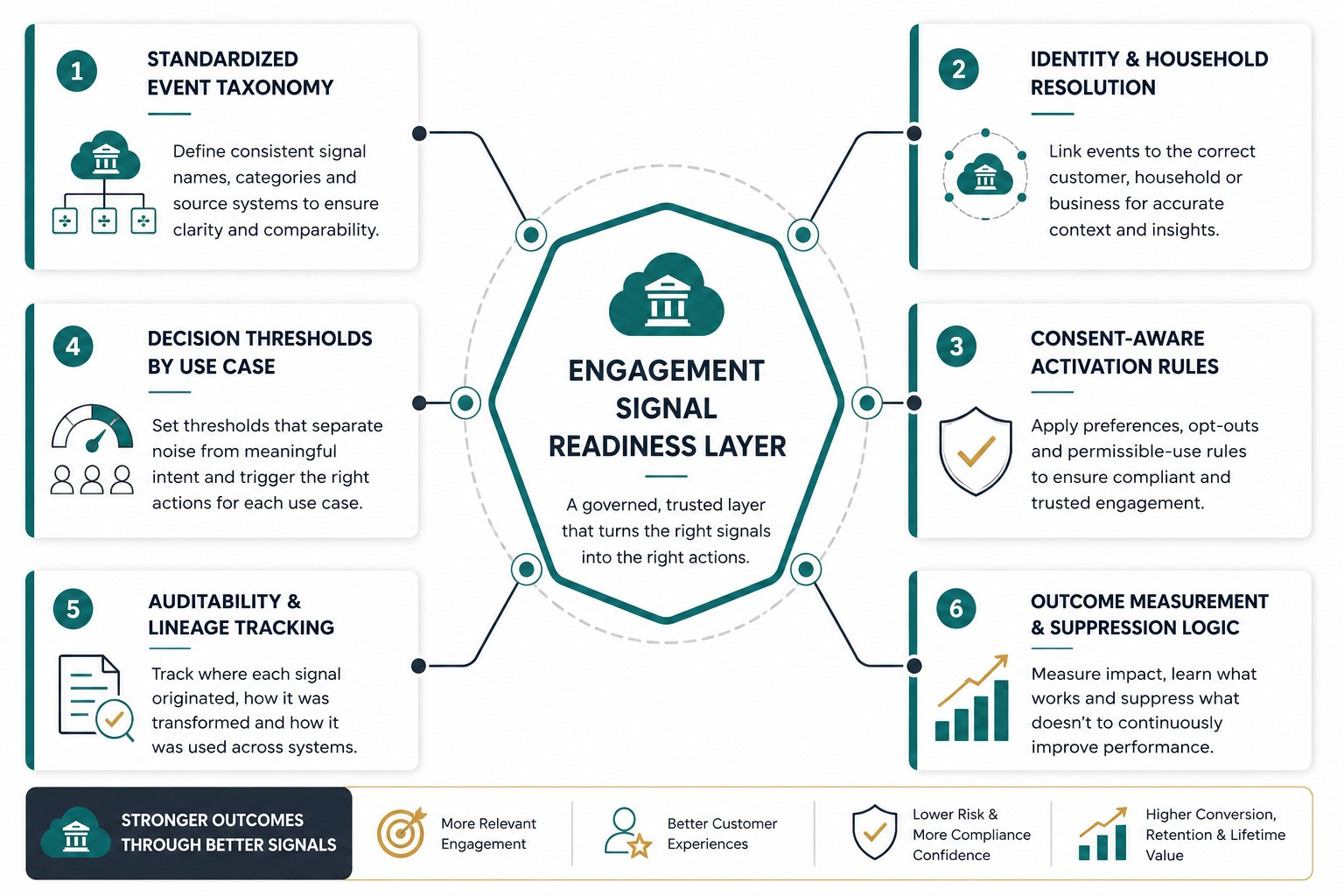
Examples of where this matters most include:
- Onboarding and early tenure: Determine which actions indicate successful adoption, friction or attrition risk during the first 30 to 90 days of a relationship.
- Deposit and card growth: Distinguish between product interest, channel exploration and real purchase intent to avoid over-messaging customers who are not ready to act.
- Small business and commercial banking: Use meaningful interaction signals to prioritize outreach around treasury services, lending readiness, servicing needs and relationship expansion opportunities.
- Service and retention: Identify behavior patterns that point to friction, dissatisfaction, inactivity or vulnerability before they become account closures or complaint events.
Turn engagement data into a controlled growth asset
Cicrim helps banks define which signals matter, how they should be governed and how they can be activated across real workflows without creating noise or avoidable compliance risk. From event taxonomy design to next-best-action orchestration and measurement, we help institutions build engagement programs that are both actionable and defensible.