
Fractional CAIO Services
Connect AI adoption to institutional value, human authority and ongoing oversight.
Chief Artificial Intelligence Officer
Cicrim’s fractional Chief Artificial Intelligence Officer service gives your institution defined executive ownership for AI strategy, use-case selection, governance and lifecycle accountability. The engagement starts with an agreed mandate, decision authority and operating cadence.
- AI portfolio
- AI governance
- Lifecycle oversight
- Organizational adoption
An explicit mandate for chief artificial intelligence officer leadership
Connect AI adoption to institutional value, human authority and ongoing oversight. Responsibilities are tailored to the institution’s needs, existing leadership and retained decision authority.
AI portfolio
Prioritize proposed applications by value, feasibility, data readiness, decision impact and risk.
AI governance
Define policy, inventory, approval gates, responsible owners and human decision authority.
Lifecycle oversight
Coordinate evaluation, validation, monitoring, change, incident response and retirement.
Organizational adoption
Prepare leaders and teams to use AI appropriately, measure performance and challenge limitations.
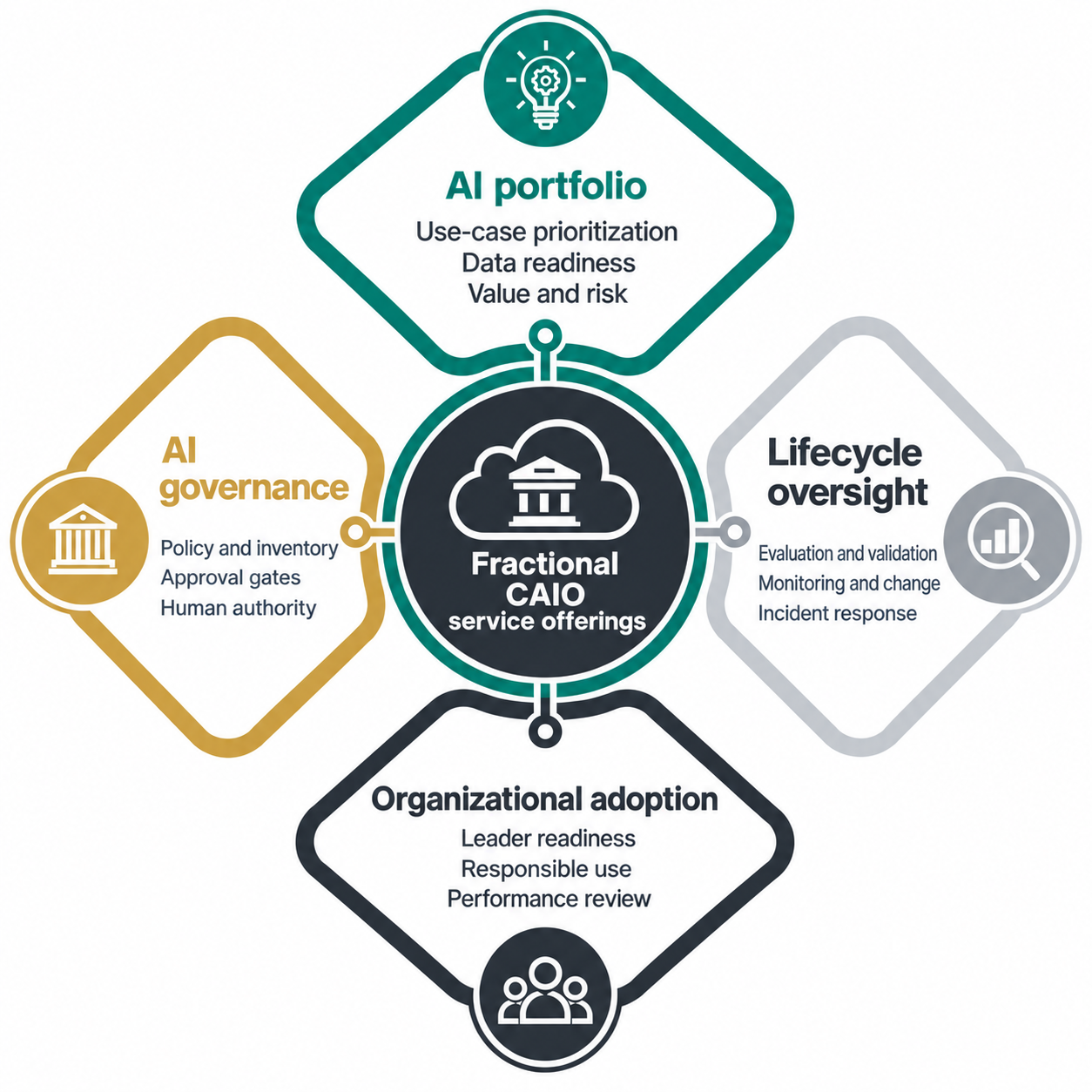
The CAIO mandate needs governance that connects AI value, data readiness, human authority, model risk, lifecycle controls, and responsible adoption.
AI decisions with human authority
Cicrim defines who proposes, challenges, approves, monitors, changes, and retires AI use cases, with explicit accountability for affected decisions.
- Use-case intake, prioritization, and approval gates
- Human authority, policy exceptions, and risk acceptance
- Model, vendor, data, and control-owner assignments
Lifecycle evidence from pilot to production
Oversight follows performance, fairness, explainability, security, incidents, and business value throughout the AI lifecycle.
- Evaluation, validation, and release evidence
- Performance, drift, incident, and change monitoring
- Value realization and retirement decisions
The CAIO engagement leaves a usable AI governance system, prepared decision owners, and adoption routines that preserve human accountability.
Build AI leadership
Coach business, data, technology, risk, and compliance leaders to challenge AI proposals, interpret evidence, and exercise their retained decision authority.
Transfer AI governance
Hand off the AI inventory, approval records, lifecycle standards, monitoring measures, incident paths, open risks, and governance calendar.
The CAIO mandate, availability, approval authority, and adoption measures are defined for the engagement. Institutional management retains accountability for AI use and resulting decisions.
AI decisions that need leadership
Set the AI mandate
Select the use cases, value measures, human authority, and risk boundaries that require CAIO leadership.
Govern value and risk
Align business, data, technology, compliance, and model-risk owners across approval, monitoring, and adoption.
Transfer AI capability
Advance approved use cases and leave accountable owners, lifecycle controls, and adoption routines in place.