
Fractional CISO Services
Make cybersecurity decisions accountable, risk-based and operational.
Chief Information Security Officer
Cicrim’s fractional Chief Information Security Officer service gives your institution defined executive ownership for cyber risk, access controls, incident preparedness and security governance. The engagement starts with an agreed mandate, decision authority and operating cadence.
- Security strategy
- Control ownership
- Incident preparedness
- Board visibility
An explicit mandate for chief information security officer leadership
Make cybersecurity decisions accountable, risk-based and operational. Responsibilities are tailored to the institution’s needs, existing leadership and retained decision authority.
Security strategy
Prioritize security investment against the bank’s assets, exposures, risk appetite and operating needs.
Control ownership
Clarify who owns identity, vulnerability management, monitoring, third-party security and remediation.
Incident preparedness
Coordinate response roles, escalation, exercises, recovery dependencies and lessons learned.
Board visibility
Report material cyber exposures, control gaps, remediation progress and management decisions.
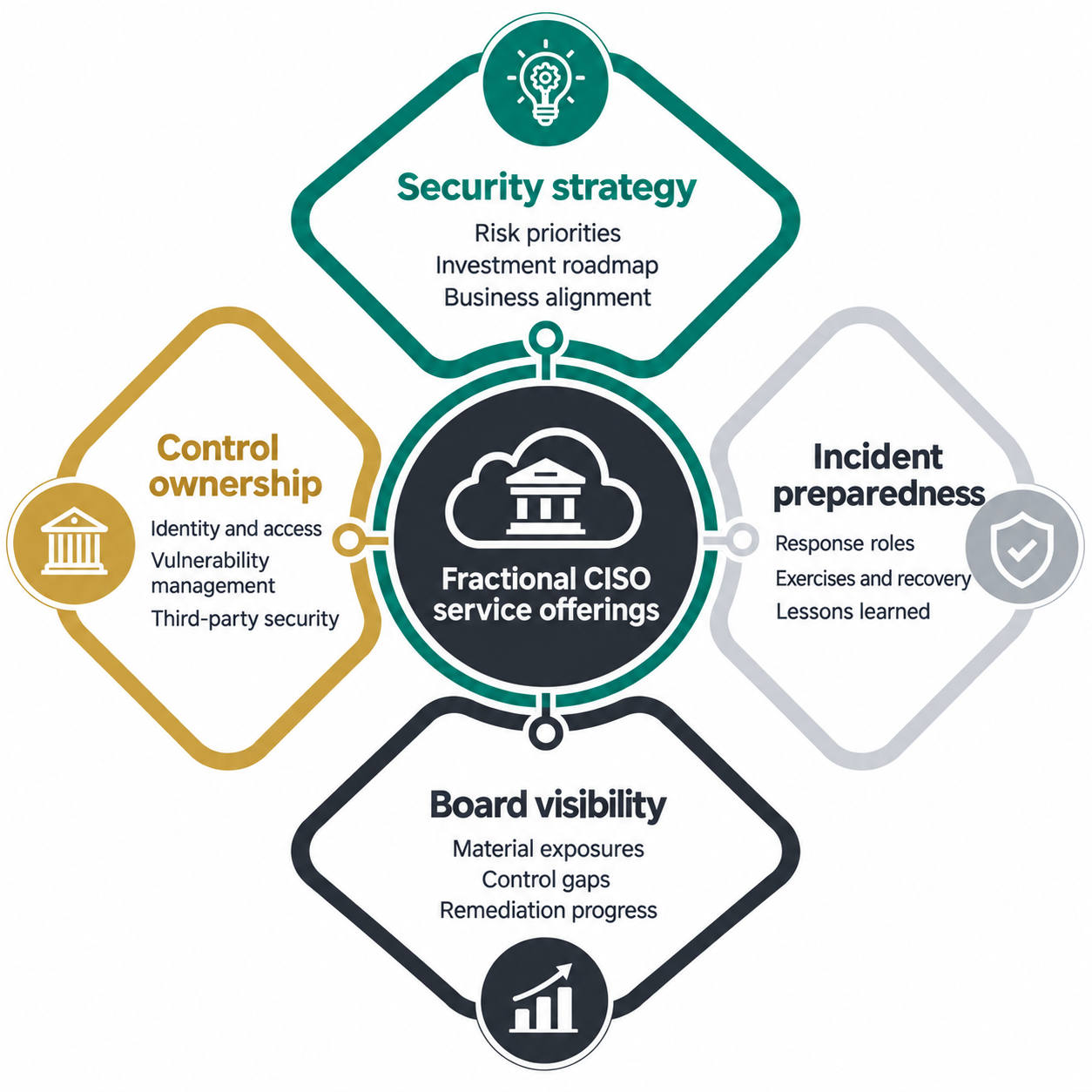
The CISO mandate needs a risk-based security system that assigns control ownership, escalates material exposure, and keeps preparedness visible to management and the board.
Cyber risk decisions with accountable owners
Cicrim establishes decision rights across identity, vulnerability management, monitoring, third-party security, incident response, and remediation.
- Risk acceptance and control-owner forums
- Material exposure and remediation decisions
- Third-party security and exception escalation
Security evidence leaders can act on
Reporting connects threats, control performance, incidents, exercises, and recovery readiness to defined risk decisions and accountable action.
- Control health and remediation evidence
- Incident exercises, lessons, and recovery dependencies
- Board-ready cyber risk and decision reporting
The CISO engagement leaves named security owners, repeatable risk decisions, and response routines that remain usable after fractional leadership transitions.
Build security leadership
Coach security, technology, risk, and business owners to challenge exposure, prepare decisions, lead response activity, and sustain remediation accountability.
Transfer security ownership
Hand off the risk register, control-owner map, incident and exercise records, open remediation, third-party issues, and executive reporting cadence.
The CISO mandate, availability, escalation authority, and transition measures are defined for the engagement. Institutional management retains accountability for security and regulatory obligations.
Security decisions that need leadership
Set the security mandate
Define material risks, control ownership, escalation authority, and the decisions that require CISO leadership.
Govern risk and resilience
Align security, technology, operations, compliance, and vendors around exposure, evidence, incidents, and remediation.
Transfer security ownership
Strengthen preparedness and leave named control owners, risk routines, and response playbooks in place.